

 Posts
Posts


ECW.
Those three letters meant that some of the most outrageous material ever filmed in the realm of professional wrestling was about to take place.
Although there could be a backstory to all this hubbub, instead I am giving you a DVD to watch and a book to read.
The Rise + Fall of ECW, #3 on my list of the best DVDs WWE ever made, is a three hour tour-de-force of the history of the company. Of all the documentaries that Vince and company made, this was the best one, and that is saying something. All of the major players are interviewed, and all the major events (both in and out of the ring) are covered. Heck, it even has that “Mature Audiences Only” screen because for PPV, the documentary was rated TV-MA!

As for the book, it’s a gem entitled Hardcore History: The Extremely Unauthorized Story of ECW. Authored by Scott E. Williams, this feels like a research project that went beyond the normal “tall tales”. It’s a book that of all the tomes published about ECW, this one tells the best story, with minimal sensationalist/revisionist history (not like WWE).
ECW, as noted earlier, was practically synonymous for creating controversial material. Their way of doing business in the ring would be so influential that the big leagues took notice. It also inadvertently was the heart of the Monday Night War.
Without further ado, let’s take a look at some different ways ECW changed the game.
The Talent
Extreme Championship Wrestling wasn’t tied down with corporate voodoo like a World Wrestling Federation and World Championship Wrestling.
Essentially, this meant that the small-time promotion in Philadelphia could take a bunch of chances.
One of these areas was hiring the talent that WWE/WCW wouldn’t normally bat an eye on.
For example, would WCW or WWE hire a man with as many visible scars as Sabu in 1994? I mean, look at the guy:
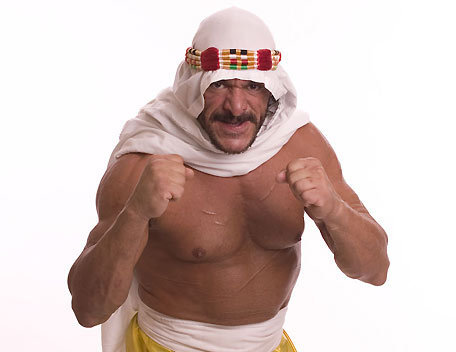
Terry Brunk, the man behind the alter-ego, is so tough he would fight you to the death. With his expertise being death matches of more varieties than Heinz, it’s no wonder this man could definitely be the face of a renegade promotion.
Another odd-looking superstar in ECW at this point definitely had to be Sandman.

Here’s a guy who looked like a regular Joe. A man who may very well have been at your workplace (minus beer and kendo stick of course). Hell, its been well-known this man wasn’t in the best of shape…EVER. Jim Fullington however became a fan favorite by being an ass-kicker who threw everything he had into his matches. This is a prime example of how ECW went against the status quo in choosing its talent.
In a cut against the grain, ECW also gave international superstars (not the WWE synonym for wrestler) a platform to go nuts.
Men like Rey Mysterio, Eddie Guerrero, Chris Benoit, Dean Malenko, amongst many others, were able to showcase their worldly abilities in front of rabid fans every week.

The revelations were eye-opening to the point where Eric Bischoff, trying to find ways to beat WWE, did a ‘raid’ and hired all these men.
While ECW had the spotlight and the spirit, WCW had the lucrative contracts. Contracts equal $, and that dough was what wrestlers needed in order to provide for their families.
In addition to the ‘guarantee’, these newly termed ‘cruiserweights’ were one of the primary reasons why WCW got a leg up in the beginning of the Monday Night War. Their platform the big league provided would be miniscule in comparison, and due to politics, most would never advance in the company.
The Gimmicks
When ECW was first starting to gain popularity in the underground, mainstream WWE and WCW had garbage on the tubes.
Playing to the “kid-friendly” demographic, there were Ding Dongs, plumbers, race car drivers, “evil foreigners”, etc. The gimmicks were what drove the wrestling at the time, and the gimmicks were what drove the ratings down.
ECW had gimmicks, there’s no denying that, but the tools at their disposal were much different than their upper-class brethren.
Sure, there was a rapping tag team who put opponents through tables.


Yes I know this was from ONS in 2005, but dammit this is too awesome to ignore!

BTW, this match took place on exactly my eighth birthday!
The hint was that those men behind the characters were just playing as themselves.
ECW didn’t have a creative team or script writers, so what appeared in the ring was what you got. WWE and WCW may not have had much in terms of creative either, but they did give their characters strict guidelines to follow, and thus it became apparent those gimmicks wouldn’t be (for the most part) very entertaining.
In 1997, WWE ushered in it’s “Attitude Era”. Although there could be several distinct points used in describing when it started, one could use Shawn Michaels’ “Blaze of Glory” promo as a big example. Shawn, full-on Degenerate at this point in his career, came down to the ring to do an interview segment with Jim Ross. Only Shawn though was sporting biker shorts with a tube of gauze exposing his, um, junk.

ECW could be given credit for starting a revolution for how characters were conceived in wrestling. In this instance, they may have not been a direct cause to the change of direction, but inspirational they sure were. Hell, Paul Heyman was on WWE’s payroll at the time!
____________________________________________
THE STORYLINES
For every “Austin vs. McMahon”, there was about twenty cases (or more) of “Jean-Pierre-Lafitte stole Bret Hart’s jacket.”
WWE and WCW in the mid-1990’s were throwing proverbial crap at the figurative wall trying to see what stuck. At this point in time, the gimmicks were corny and the audience was being driven away. Keep in mind there were corporate masters to please, and gates to meet.
Enter in ECW.
There was a creative freedom in this small promotion not experienced in either of the big-named companies.
Not only could the men play as themselves, but the storylines concocted were as edgy/dark as stories could get.
For example, there was an angle about Tommy Dreamer blinding the Sandman. At the time, it was controversial for two reasons. One, it featured both good guys and bad guys caring about this one person, the one being Sandman. That was considered taboo, and almost a break of kayfabe. Two, the man behind Sandman (Jim Fullington) stayed true to the angle to the point where he didn’t leave his house during the duration of the sit-out!


____________________________________________
THE MATCHES
In addition to unique gimmicks and edgier storylines, ECW changed the perception of how a match should be as well.
For example, did anyone notice that later on in WCW and WWE that wrestlers took a lot more chances than they did previously?
That’s because ECW made it cool.
As time went on in ECW, the “regulars” at the ECW Arena knew what to expect from the wrestlers.
So the wrestlers of course had to keep changing it up.
Whether it was a new spot, or a new move altogether, one of the best things about ECW was how there weren’t many boundaries on how a match was performed.
Instead of having a flow of “x does this” and “y does that”, it was more like, “THIS IS AWESOME,” and, “YOU FUCKED UP!”
That’s right. In addition to your normal heat segments and ‘hulking up’, the smarks in attendance will notice how well the wrestlers work each other. If a match’s flow is consistent and fluid, then the fans will be positive. Have a rookie in there who botches a few segments, then bring out the tar and feathers!
Since WCW and WWE saved the big moments for their bigger events (i.e: PPV’s), ECW always gave their faithful more than their fair share. Whether it was a high spot, a convoluted technical spot, or even when the bad guy gets his, ECW fans react to everything that goes on.
Sure enough, the major leagues caught on to this, and their matches starting taking more risks. The crowds weren’t as vocally rambunctious, but they did voice their opine.
CONCLUSION: As wrestling stagnated in the mid-1990’s, there was a promotion that shook the foundation the ‘extreme’ way.
Extreme Championship Wrestling ushered in what many of us took for granted today.
With a diverse talent pool, fresh gimmicks, edgy storylines, and a whole new way to view matches, ECW’s philosophy of accentuating the positives while hiding the negatives would eventually bring radical change in the mainstream companies of WCW and WWE.
These changes would be a major part in the ‘Monday Night War’’. The highest ratings, the highest crowd participation, and the most accelerated change, all happened because one company wanted to out-do the other.
In the background lied a company whose innovations and ideals would change the very landscape of sports entertainment forever. The one whose ideas would trickle down, and inspire the higher-up companies to follow in their path.
It would be unfair to say ECW was the direct cause of edgier programming, but it is fair to say ECW was definitely an inspirational tool for it. Between talent raids and creative liberties, ECW could also be known as the first victim of the Monday Night War.
Technorati Tags: wwe championship,ecw,wcw,wwe,bad booking,amazon,youtube,storyline,gimmick,match,sabu,sandman,tazz,tommy dreamer,terry funk,raven,eddie guerrero,dean malenko,chris benoit,paul heyman,nostalgia,attitude,dvd,extreme rules,blu ray,vanilla,cheese souffle,new jack,dudleys,2 cold scorpio


