Posts
Posts


(Author’s Note:In the last article, I mentioned I’d be doing a match to celebrate my birthday on the blog.
I was wrong.
Sometimes writers have that ‘developmental hell’, where pieces are started, but never finished. This originally was one of those articles, but after skimming it over, I thought it had potential. Here is the final result of that ‘hell’, and I will say this: I really love writing about this era.)
Although professional wrestling had a successful boom period in the 1980s, the decade that would soon follow would completely turn the business on its head.
Between multiple changes of the guard, new styles, and new ideas when it came to producing a product, the 1990s is a decade that quite frankly is one of the more creative entities in sports-entertainment history.
On this countdown, with no particular order of importance, we’ll all look at what made the 1990s such a happy, nostalgic, angry, ruthless, but nonetheless, passionate era.
While “the big three” (WWE, WCW, & ECW) are the major players in the story, the foundation of today was built during this time period. WWE may have ‘won’ the war so to speak, but it turns out the fans were the real winners in how the decade shaped up. So let’s not waste any more time, and let’s see how a whole business changed dramatically over the course of this time!
1. ‘Changing of the Guard’

WCW also had it’s fair share of change. Starting with major corporation changes, it tried (and failed miserably) to pattern it’s darker material after the more kid-friendly WWE. DING DONG! Ted Turner wasn’t going to let this money-bleeder die sitting down, so in a meeting of the minds, he allowed Eric Bischoff to take charge and become the biggest game in town. This would end horribly after multiple screw-ups, on-screen and off. Those malfunctions allowed the WWE to steamroll momentum, and then purchase it’s main competition for pennies on the dollar.
Another sense of the guard changing can be from a previously outside source with a fresh sense of enthusiasm.
It can be something so new and in your face that even the big-wigs from multi-million dollar corporations have to stand up and notice.

Although it’s peak wouldn’t be until much later in the decade, ECW was a smaller-time wrestling promotion that relied on mainly no-nonsense atmosphere with some of the most passionate fans anyone could ever ask for.
Doesn’t help that the newly-instated blood ban in the big leagues made the liquid spill in Philadelphia that much more “shocking” either.
ECW however relied on its “kool-aid” in order to get further ahead. For example, ECW was the first of the big three to enlist major Mexican and Japanese stars in it’s promotion. Although the fans were “extremely smart”, they would be given an awakening in one or two matches with these insane performers. No weapons (for the most part) were needed, as the amazing technical displays were all that was needed.

Another example was that ECW was the first of the big three to rip open that proverbial “fourth wall”, and proceed to bust it down over and over again. Not insulting it’s fan base, the promotion would regularly make personal lives of the roster known. Who knew that Sabu had his neck legitimately broken, or who knew that Raven pissed off the fans so bad he had to apologize somewhat out-of-character? This was happening at a time where if a guy on WWE or WCW television was injured, they’d be written out of storyline because of a “convenient occurrence”.

While ECW will be featured prominently in this list, this is just a taste of how important this promotion would be.
To cap off this part of the chapter, it should also be noted that both WWE and WCW took ECW to their advantages. Both companies raided talent at different points, and even began to soften up strict programming policies with more violent tendencies. By the end of the 1990s, ECW was sadly starting to look like an imitator to the game it innovated. Paul Heyman wasn’t willing to change his ‘baby’ for the mainstream, and therefore ECW would die as a promotion that probably had the most promise to take down the big guys.
2. Steroids (Or lack thereof, but they’ll never completely go away.)
Back in the 1980’s, the World Wrestling Federation made physique an important concept in character creation.
Instead of men like The Crusher whose beer guts were practically synonymous with their alter ego, new blood like Road Warriors Hawk and Animal (yes I know they’re NWA at the time) were ripped, fresh, young, and primed with potential.
Of course getting that six-pack abs and the sick traps would mean getting a little extracurricular help.
Although not an entirely new phenomenon, the injections of anabolic steroids would undoubtedly be the biggest tool (in addition to regular workouts) in helping shape new/muscular bodies.

Instead of Nick Bockwinkel...
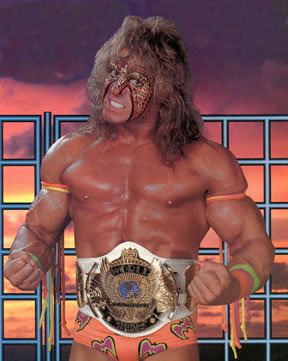
...We get WARRIYAH!!!!!
The shit would hit the fan soon enough on this craze.
The man in the WWE largely responsible for handling the injections, Dr. George T. Zahorian III, would be tailed by the federal government. This led to the doctor’s arrest, and a humiliating court case for the WWE. Between 1989-1994, the WWE had it’s name pretty much destroyed, while losing a lot of money with all-time low revenue.
As a direct result, the whole roster got “smaller”.
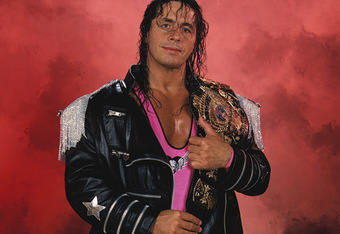
Heading the charge of talent would be Bret Hart, a 6’0” 230 pound Canadian who would usher in “The New Generation” in later 1992. In his wake, men like Shawn Michaels, chicken-legged Diesel (Kevin Nash), “fat-ass” Undertaker (as opposed to the skinner one that’s been in action for the last decade), amongst others, would grab the spotlight instead of men like Hogan, who jumped ship to WCW. Never mind the fact Hogan looked like an ass in federal court.
While steroids are always going to be a part of wrestling, at least the major crackdown in the 1990s led to “healthier” looking performers. The Wellness Policy WWE has in place today is an evolutionary stance on this belief, and there have been people suspended because of the juice (Orton, I’m looking at you!).
3. The Monday Night Wars
Wrestling on television is one area where the profession has really evolved over the years.
From your DuMont Channel bouts with Freddie Blassie to Jim Crockett’s NWA (National Wrestling Alliance) on TBS at 6:05, professional wrestling has always had a spot at the proverbial dinner table (I mean tube).
Most of the matches shown until the mid-1990’s where primarily bigger names going over jobbers. Very rarely were there epic title clashes shown on television, outside of big name programs like Saturday Night’s Main Event and Clash of the Champions. Those weekly programs were designed for character evolution and hyping the local market cards.
The radical turn of history occurred when Eric Bischoff, pretty much the main guy in WCW on a whim and a prayer, was asked the question, “How do you combat WWE?” Bischoff’s response was to put themselves head-to-head with WWE on Mondays, because WWE had RAW. Turner gave the okay, and Bischoff went IMMEDIATELY to work.
On September 4th, 1995, at the Mall of America, Monday Night Nitro premiered on TNT to huge ratings. Ric Flair and Sting head-lined the show, but the major attraction would be the appearance of one Lex Luger.

Luger, who had been with the WWE since his stint in the fledging WBF (that crappy bodybuilding promotion that died off quick) in 1992, was in contract negotiations with Vince McMahon. Although Luger was with WWE the night before, the contract was never renewed, and therefore the big man showed up completely unannounced. This left the announcers dismayed, but the paying audience were in a frenzy!
This would the first amongst a series of bombshell/landmark moments for the fast-rising Nitro brand.
Between throwing out the “trash” (which would be Medusa chucking the WWE Woman’s Championship in the can on live air), and the formation of what would be the nWo , a refreshed WCW would soon take over the ratings from a stale WWE.
While it’s been said Vince was really close to losing his company, it’s also true that Vince decided to go where no man has boldly gone before.
With a little ‘Attitude’.

After a particularly disastrous episode of RAW from Europe in early 1997, which saw Owen Hart become European Champion in an epic match with Davey Boy Smith, Vince completely re-modeled the program. From the TitanTron, to the ring skirts, to the theme song (which was Marilyn Manson briefly before turning over to Thorn in Your Eye), and then right down to the script, RAW’s transformation became an edgier product.
It would be another year before fans would see the realization as WCW was still kicking ass and taking names, even if the show was a little repetitive.
April 13th, 1998 would be a massive turning point in the war. Stone Cold Steve Austin, former WCW wrestler who had been given a complete re-christening in WWE, was WWE Champion defending his title against one Vince McMahon, chairman of the board and boss to Mr. Austin. Although the contest would be marred by other activities, the sheer spectacle of it all gave a surging RAW it’s first win in the ratings since 1996.
With a few exceptions, like Goldberg’s title win and Ric Flair’s return, WWE would win just about every week until the end, which was 2001.
What REALLY cemented WCW’s burial was one fateful night in 1999, January the 4th to be exact.
During the Nitro broadcast, which was up against the taped product of WWE, Tony Schiavone was told by Eric Bischoff to announce to the WCW audience that Mick Foley, who had wrestled as Cactus Jack for the company, is going to win the WWE Championship on their broadcast. “That’s gonna put some butts in the seats,” Tony quipped, which was another forced line into the mic.
Sure WWE showed their broadcast, and Foley’s title win was glorious. A NO-DQ match per stipulation, it was a wild brawl. While Rock’s Corporation stable mangled with Foley’s supporting D-Generation X stable, Austin’s music hit and the place EXPLODED!

Waffled with a chair shot, Rock was pinned and, “Daddy did it!” exclaimed the newly crowned albeit exhausted champion Foley.
Turn over to the WCW broadcast, which booked a last-minute title match with Kevin Nash (who beat Goldberg at Starrcade with help of a tazer gun-toting Scott Hall) and Hulk Hogan, who had only returned earlier that night.

Both men looked ready to do battle, but did a fake-out to the crowd. Hogan finger-poked Nash, and therefore became new champion. Outraged and delirious, fans were sure never to see this promotion again and the ratings proved it.
Although the War would end in 2001, the way the conflict revolutionized television is still with us today.
For example, WWE’s production values are very high-class, where in 1995 it was somewhat low-budget. Also there are high-end main events every week, while beforehand you’d be lucky to see a big star squash a jobber just a few years before. It’s small, but very noticeable, in the grand scheme of things.
4. VINCE f’ing RUSSO

Okay, put down the pitchforks and sawed-off shotguns.
Long before Russo would be credited (along with Ed Ferrera) for killing WCW, Russo was just a magazine editor.
With an imagination!
Russo’s hand at writing in the WWE Magazine, under the pseudonym Vic Venom circa 1995 or so, was mainly featuring fantasy feud articles.
Apparently it caught the other Vince’s attention.
As a “reward”, or really trying to see what would stick, Vince (McMahon) gave Vince (Russo) and Ed the task of writing RAW in early 1997.
As noted before, the transformation would take time to see results, but what would result was glorious television.
Unlike the bland era of once before, this new colorful era would feature complex storylines (some of which didn’t make sense), swearing, sexual content, swerves, and other notables that eventually would all become trademarks under the Russo bandwagon.
D-X’s antics? Russo.

Kane and Undertaker’s feud, all the way from the beginning in 1997ish? Russo.

Beaver Cleavage? Russo.

Survivor Series 1998? Russo.

But with prime power comes prime responsibility.
The editing/molding of Vince McMahon helped Russo reign in the writer’s talents, and thus made Russo’s exaggerations a great tool for the tube.
In 1999 though, after being handed SMACKDOWN to his plate, Russo resigned from WWE and headed to the “greener pastures” of WCW.
Less said the better.
5. THE GIMMICKS
Perhaps the biggest evolutionary change of the 1990’s was perhaps how gimmicks, aka character traits, were handled.
At the start of the 90’s (and this is speaking strictly of the WWE), most men had a character and played to that character. Hogan was an All-American hero, Ultimate Warrior was a high-strung fanatic who believed in the power of the Gods above him, and Mr. Perfect was, well, PERFECT!
In the mid-1990’s, WWE TV was going down the tubes and creative tried to do something, well, creative.
These were some of the following gimmicks used in this time: a pirate (Jean-Pierre Lafitte), a garbage man (Duke Droese), MANTAUR, KWANG, a friar/flatulent rotund man (Mike Shaw, bless you sir), WHO, WHAT (oh wait, that’s later in 2001), and other men whose lives who would be laced with failed characters.
(I’ll save you by not posting videos of those hideous creations.)
In conjunction with ‘The Wars’, WWE’s program was under fire like it had never been before. While the storylines were picking up steam in later 1996, the characters were still just that, characters. Men had to portray whatever was in front of them.
Fast forward to later 1997, and ‘Blaze of Glory’ just happened. To those new to the business, that term is used to describe an infamous Shawn Michaels promo where he stuffed gauze down his pants and made somewhat-obscene gestures to Jim Ross, all the while setting up that GREAT Hell in the Cell encounter with Undertaker. Vince originally fined Shawn $10,000 for the endowed on-air display, but later reneged the penalty.
Instead, this ushered in another piece of ‘Attitude’. Now in addition to more violent matches and raunchier storylines, the character development changed dramatically. Instead of trying to clear-cut defined characters on a piece of paper, men were told just to act like themselves.
This led to New Age Outlaws telling your ass to call somebody, Edge being ‘Broody’, and Mick Foley (in any of his alter egos) owning everyone on the microphone with his world-class promo ability first seen in ECW.

And that’s before we get to Stone Cold Steve Austin and Triple H, who quite frankly, were starting to do their own thing before that promo took place.
While character gimmicks starting to take shape again in the mid-2000’s, it is important to note that of all the elements in the 1990’s that made that decade so special, the gimmicks may have had one of the more profound changes. Going from a concrete portrayal to acting like yourself allowed the men (and women for that matter) to display a personal side that mainly complimented the character while adding depth and charisma.
_________________________________________________
CONCLUSION:
Although professional wrestling had a successful boom period in the 1980s, the decade that would soon follow would completely turn the business on its head.
Between multiple changes of the guard, new styles, and new ideas when it came to producing a product, the 1990s is a decade that quite frankly is one of the more creative entities in sports-entertainment history.
This article was a grand look back at some of the reasons why the 1990s were such a radical departure from the wrestling culture of the past. Chalk it up to imagination, competition, desperation, you name it. The landscape of wrestling forever changed in the 1990s thanks in small part to ‘keeping up with the times’.